

San Antonio Attic Air Sealing
Attic Air Sealing in San Antonio, TX
Reduce unwanted air movement between your home and attic.
Attic air leaks can allow hot attic air, humidity, and conditioned air to move through gaps around the ceiling. San Antonio Insulation Pros can inspect your attic, identify accessible air leakage points, and seal areas that may be affecting comfort and insulation performance.
- Free Estimates
- Quality Work
- Licensed & Insured
- 5-Star Rated
Free estimate
Get a Free Estimate
Tell us what you are noticing with upstairs comfort, attic access, or ceiling openings. We can inspect the attic and identify accessible air leakage points before recommending sealing or related work.
Your request is sent securely to our business email. We do not store leads in a database on this site.
Why Does Attic Air Sealing Matter in San Antonio?
San Antonio's hot summers can put a heavy cooling load on your home. If air can move freely through openings between the living space and attic, adding more insulation alone may not address the entire problem.
Air sealing focuses on the gaps and penetrations that allow unwanted air movement. Insulation and air sealing perform different jobs, so we inspect both before recommending attic improvements.
Common signs that your attic may need air sealing include:
- Upstairs rooms that stay hot
- Uneven temperatures between rooms
- Long AC run times
- Drafts around attic access points
- Visible gaps around ceiling penetrations
- Hot or uncomfortable rooms below the attic
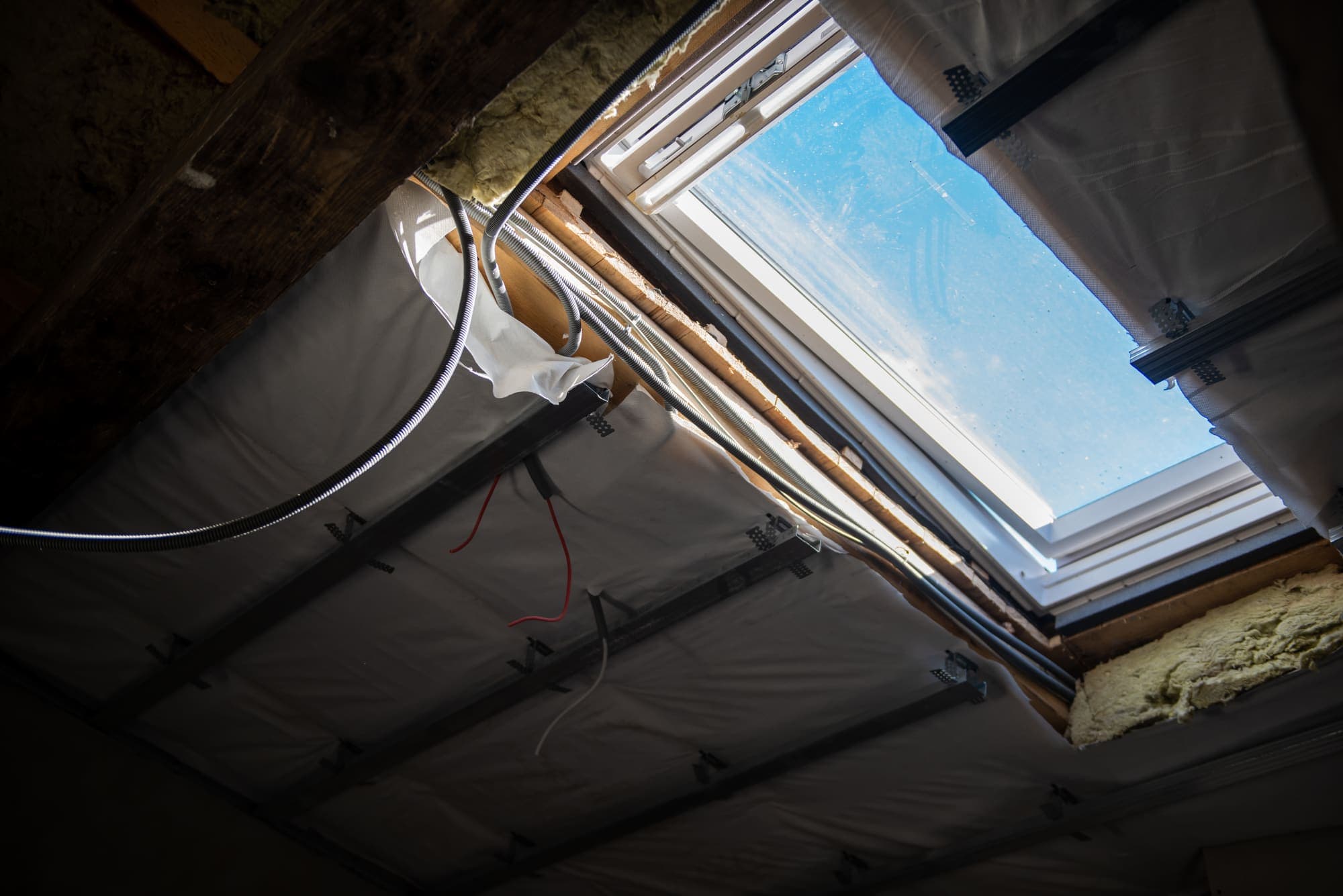
Where Do Attic Air Leaks Occur?
Air can move through many small openings in the ceiling between your living space and attic.
Attic Hatches
Attic access panels and pull-down stairs can leave gaps around the opening if they are not properly sealed.
Plumbing and Wiring Penetrations
Pipes, wires, and other utilities often pass through the ceiling and can leave openings around the penetration.
Wall Top Plates
Gaps around the top plates of interior and exterior walls can allow air to move between the home and attic.
Recessed Lights
Certain recessed lighting installations can create openings through the ceiling plane. The appropriate sealing method depends on the fixture and its installation requirements.
Duct and Other Openings
Duct penetrations, chases, and other ceiling openings can also contribute to unwanted air movement.
Attic Air Sealing and Insulation Work Together
Air sealing and insulation are related, but they are not the same thing.
Air sealing helps reduce unwanted air movement through gaps and openings.
Insulation helps slow heat transfer through the insulated assembly.
If your attic has thin insulation and open air leaks, we can evaluate both conditions before recommending additional insulation. In some cases, air sealing should be completed before adding or topping off insulation.
Our Attic Air Sealing Process
- 1
Inspect
We inspect the attic and look for accessible openings and areas where air may be moving between the home and attic.
- 2
Identify
We determine which leakage points should be addressed based on the attic layout, construction, and existing conditions.
- 3
Seal
We seal appropriate gaps and penetrations using materials suited to the location and application.
- 4
Verify
We check the completed work and make sure attic ventilation paths have not been blocked by the work.
Attic Air Sealing and Ventilation
Air sealing does not mean closing off the attic's designed ventilation.
When working in a vented attic, we need to keep the intended ventilation paths open, including appropriate soffit and ridge ventilation. Insulation should also be kept away from ventilation openings where baffles or other measures are needed to maintain airflow.
The goal is to seal the ceiling plane while preserving the attic ventilation system.
This distinction is important because air sealing and ventilation address different parts of the attic system.
When Should You Consider Attic Air Sealing?
Attic air sealing may be worth evaluating when:
- Your upstairs rooms stay warmer than the rest of the home
- You are adding or replacing attic insulation
- You notice gaps around ceiling penetrations
- Your attic hatch has visible gaps
- Your home has older insulation and multiple ceiling penetrations
- You are already having attic insulation work completed
If the existing insulation is damaged or contaminated, insulation removal may need to happen before air sealing and new insulation are installed. We also check insulation depth, moisture, pest damage, ventilation, and access when evaluating air sealing.
Attic Air Sealing Cost in San Antonio
The cost of attic air sealing depends on the size and layout of the attic, the number of accessible leakage points, existing conditions, and the amount of sealing required.
Projects with a few accessible openings will have different requirements from attics with numerous penetrations, complex framing, or other preparation needs.
We inspect the attic first and provide a quote based on the actual work required.
Free estimate
Get a Free Estimate
Tell us what you are noticing with upstairs comfort, attic access, or ceiling openings. We can inspect the attic and identify accessible air leakage points before recommending sealing or related work.
Your request is sent securely to our business email. We do not store leads in a database on this site.
Calculate Attic Air Sealing Cost in 60 Seconds
Why Choose San Antonio Insulation Pros?
We look at the attic as a complete system rather than treating air sealing as simply adding foam to visible gaps.
Before recommending the work, we consider:
- Existing insulation
- Air leakage points
- Attic access
- Ceiling and attic construction
- Ventilation paths
- Moisture conditions
- Planned insulation work
This helps us determine whether air sealing should be completed alone or as part of a larger attic improvement.
Areas We Cover
San Antonio Insulation Pros provides insulation services throughout San Antonio and surrounding communities. We serve homeowners in nearby cities with attic air sealing and other residential insulation needs.
- New Braunfels
- Schertz
- Seguin
- Converse
- Cibolo
- Boerne
- Universal City
- Live Oak
- Helotes
- Selma
- Leon Valley
- Castle Hills
- Windcrest
- Terrell Hills
- Shavano Park
- Austin
Related Articles
Guides and comparisons that can help you plan the right insulation work for your home.
September 24, 2026
How Much Does It Cost to Insulate a House?
How house insulation cost is calculated, price per square foot by area and material, example estimates, and what changes the total.
Read articleSeptember 25, 2026
DIY Attic Insulation vs. Professional Installation
How to insulate an attic yourself, what tools you need, and when a professional makes more sense for blown-in, walls, or problem attics.
Read articleSeptember 26, 2026
Fiberglass Insulation: Batts vs. Blown-In
Fiberglass batts vs. blown-in insulation: R-values, thickness, where each works best in attics, walls, and ceilings, and mistakes to avoid.
Read article
Frequently Asked Questions
Attic air sealing is the process of closing appropriate gaps and openings between your living space and attic to reduce unwanted air movement.
Often, yes. If accessible air leaks are present, addressing them before adding insulation can help create a more complete attic system. Air sealing and insulation solve different problems, so the existing conditions should be evaluated first.
No. Insulation slows heat transfer, but it does not automatically seal gaps and penetrations through the ceiling.
Common areas include attic hatches, plumbing and wiring penetrations, wall top plates, recessed lights, duct penetrations, and other openings through the ceiling plane.
Yes, depending on the condition of the existing insulation and the scope of the project. Clean, dry, usable insulation may not need to be replaced.
Proper air sealing should not block the designed ventilation paths of a vented attic. Soffit, ridge, and other ventilation openings need to remain functional.