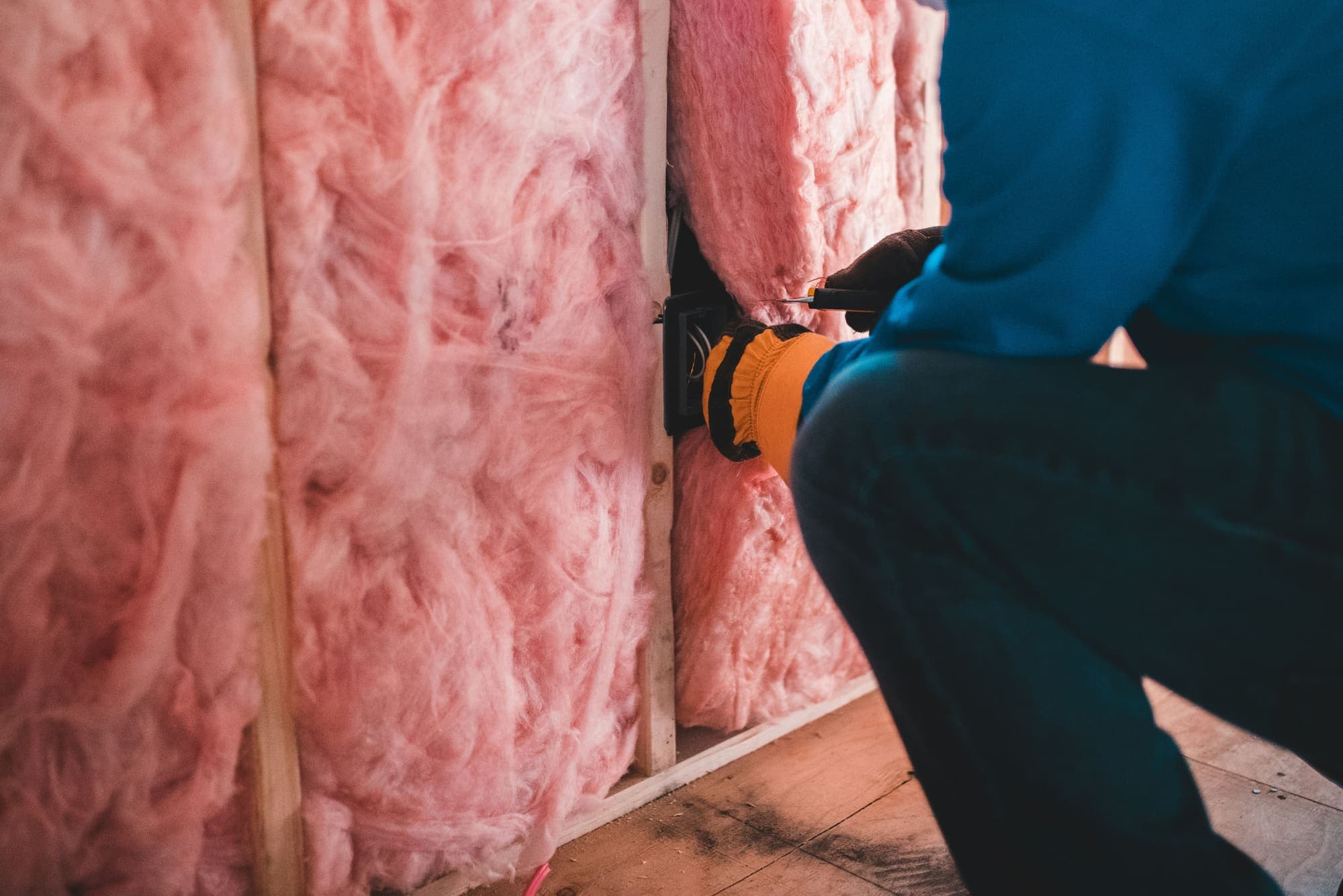
Improve your home's insulation with a fiberglass system suited to the space and how your home is built. San Antonio Insulation Pros provides blown-in fiberglass, batts, and rolls for attics, walls, and garages, while considering your existing insulation, available space, and coverage needs before recommending the right approach.
Free Estimates
Quality Work
Licensed & Insured
5-Star Rated
Free estimate
Get a Free Fiberglass Insulation Estimate
Tell us the ZIP and what the rooms are doing. We call you back.
Your request is sent securely to our business email. We do not store leads in a database on this site.
What Is Fiberglass Insulation?
Fiberglass insulation is a type of thermal insulation made from fine glass fibers that helps slow heat transfer between your home and the outdoors. By reducing the movement of heat through insulated areas, fiberglass can help improve indoor comfort and reduce the amount of heating or cooling your home needs.
Fiberglass insulation is commonly used in attics, walls, and garages and comes in three main forms:
Blown-In Fiberglass: Loose fiberglass fibers blown into open areas, commonly used on attic floors and around irregular spaces.
Fiberglass Batts: Pre-cut sections designed to fit between wall, ceiling, and floor framing.
Fiberglass Rolls: Flexible rolls that can be cut and fitted across longer, open areas.
The right type depends on the space, accessibility, existing insulation, and coverage required. San Antonio Insulation Pros evaluates these factors before recommending the appropriate fiberglass insulation for your home.
Types of Fiberglass Insulation
Fiberglass insulation comes in three common forms: blown-in fiberglass, fiberglass batts, and fiberglass rolls. Each form is suited to different spaces and installation conditions.
Blown-In Fiberglass
Blown-in fiberglass is a loose-fill insulation installed using specialized equipment. The fibers can be distributed across open areas and around attic framing, making it useful for spaces with irregular shapes or obstructions.
Key Benefits:
Commonly used in attics
Covers large areas
Works around obstructions
Adds insulation depth
Can go over existing insulation
Fiberglass Batts
Fiberglass batts are pre-cut sections of insulation designed to fit between framing members. They are commonly used in accessible walls, ceilings, garages, and other framed areas.
Key Benefits:
Fits between studs and joists
Commonly used in exterior walls
Suitable for garages
Easy to fit
Available in different R-values
Fiberglass Rolls
Fiberglass rolls are continuous lengths of insulation that can be measured and cut to fit the area. They are useful for longer, open sections where continuous coverage is practical.
Key Benefits:
Good for long areas
Easy to cut
Fits open wall sections
Suitable for garages
Provides continuous coverage
Fiberglass Insulation Services in San Antonio
We provide fiberglass insulation for the areas of your home where proper insulation can make the biggest difference. Our service starts with evaluating the existing insulation, available space, access, and condition of the area.
Attic Fiberglass Insulation
San Antonio attics can become extremely hot during the summer, making proper attic insulation an important part of the home's thermal barrier. We install fiberglass across suitable attic floors using blown-in insulation, batts, or additional fiberglass where existing insulation can remain.
We install fiberglass insulation in suitable wall cavities to help improve the insulation between your home and outdoor temperatures. The right installation method depends on the wall construction and whether the cavities are accessible.
Garages can become very hot in San Antonio, especially when they share walls with conditioned rooms or have living space above them. We install fiberglass in suitable garage walls and ceilings to improve the insulation between these areas.
Both options use fiberglass insulation, but they are installed differently and work better in different types of spaces. Blown-in fiberglass is a loose-fill material that can be distributed across open or irregular areas, while fiberglass batts are pre-cut sections designed to fit between accessible framing members. The right choice depends on the layout of the space, access, existing insulation, and the type of coverage needed.
Form
Blown-In Fiberglass
Loose-fill
Fiberglass Batts
Pre-cut sections
Installation
Blown-In Fiberglass
Blown into place
Fiberglass Batts
Fitted between framing
Best for
Blown-In Fiberglass
Open or irregular areas
Fiberglass Batts
Accessible framed spaces
Coverage
Blown-In Fiberglass
Broad, continuous coverage
Fiberglass Batts
Defined framing spaces
Existing insulation
Blown-In Fiberglass
Can often be added over suitable insulation
Fiberglass Batts
Depends on available space
Blown-In Fiberglass
Fiberglass Batts
Form
Loose-fill
Pre-cut sections
Installation
Blown into place
Fitted between framing
Best for
Open or irregular areas
Accessible framed spaces
Coverage
Broad, continuous coverage
Defined framing spaces
Existing insulation
Can often be added over suitable insulation
Depends on available space
Which One Is Right for Your Home?
The right option depends on the space, access, existing insulation, and condition of the area. San Antonio Insulation Pros can inspect the space and recommend the fiberglass installation method that fits your project.
Benefits of Fiberglass Insulation
Fiberglass insulation can be a practical option when the material and installation method are suited to the space. It offers flexibility across different areas of a home and can work for both new installations and suitable upgrades.
Slows Heat Transfer: Helps slow heat movement through insulated areas.
Multiple Installation Options: Available as blown-in, batts, and rolls.
Works Well in Attics: Provides broad coverage across attic floors and around obstructions.
Suitable for Walls: Can be installed in suitable wall cavities using batts or blown-in fiberglass.
Can Be Added to Existing Insulation: Additional fiberglass can be installed when existing insulation is suitable to remain.
Common Residential Application: Used across attics, walls, and garages.
When Fiberglass May Not Be the Right Choice
Fiberglass works well in many San Antonio homes, but another option may be better when:
The attic needs significant air sealing first
Moisture or water problems are present
Insulation is needed directly at the roof deck
Existing insulation is damaged or contaminated
Fiberglass Insulation and R-Value
R-value measures how well insulation resists heat flow. In San Antonio homes, the right insulation level can be especially important for attics, walls, and other areas exposed to the region's hot temperatures. However, the appropriate R-value depends on where the fiberglass is being installed, the existing insulation, available space, and how the area is constructed.
When San Antonio Insulation Pros evaluates a fiberglass insulation project, we consider factors such as:
Where the insulation is being installed
Existing insulation and its condition
The fiberglass product being used
Target R-value
Available installation space
Required coverage
Installation method
Whether the insulation may be compressed
Adding more insulation is not simply a matter of adding an arbitrary number of inches. San Antonio Insulation Pros looks at the existing conditions and available space before recommending the appropriate fiberglass product and insulation depth for the area.
Our Fiberglass Insulation Process
We keep the process simple.
1
Inspect
We look at the existing insulation, coverage, condition, access, and construction.
2
Recommend
We determine whether fiberglass is appropriate and which form fits the space.
3
Install
We prepare the area and install the fiberglass using the appropriate installation method.
4
Verify
We check the finished coverage, look for gaps or problem areas, and clean up the work area.
How Much Does Fiberglass Insulation Cost in San Antonio?
The cost of fiberglass insulation in San Antonio varies from home to home. It depends on the size and condition of the area, the type and amount of fiberglass needed, existing insulation, and any preparation required before installation. San Antonio Insulation Pros evaluates the actual space and installation requirements before providing a project-specific estimate.
The main factors that affect cost include:
Area Size: Square footage and coverage required
Fiberglass Type: Blown-in, batts, or rolls
Existing Insulation: Condition and amount already present
Installation Work: Access, preparation, removal, or air sealing
Because every project is different, a property-specific assessment provides a more useful estimate than a generic price per square foot.
Free estimate
Get a Free Estimate
Tell us the ZIP and what the rooms are doing. We call you back.
Your request is sent securely to our business email. We do not store leads in a database on this site.
Fiberglass, cellulose, and spray foam are different insulation systems, and each can be suited to different spaces and installation conditions. The right option depends on the area, construction, existing insulation, and requirements of the project.
Fiberglass
What It Is
Available as blown-in, batts, and rolls.
Common Applications
Attics, walls, garages, and other suitable areas
Cellulose
What It Is
Loose-fill insulation commonly blown into place.
Common Applications
Attic floors and certain wall cavities
Spray Foam
What It Is
Expanding foam that provides insulation and air-sealing properties.
Common Applications
Selected attics, walls, and other suitable assemblies
Insulation Type
What It Is
Common Applications
Fiberglass
Available as blown-in, batts, and rolls.
Attics, walls, garages, and other suitable areas
Cellulose
Loose-fill insulation commonly blown into place.
Attic floors and certain wall cavities
Spray Foam
Expanding foam that provides insulation and air-sealing properties.
Selected attics, walls, and other suitable assemblies
Not sure which option fits your home? San Antonio Insulation Pros can evaluate the space, existing insulation, and construction before recommending an appropriate insulation system.
When Should You Consider Fiberglass Insulation?
Fiberglass insulation may be worth considering when you notice comfort or insulation issues in specific areas of your San Antonio home. It can be useful for new insulation, upgrades, or adding coverage where existing insulation is suitable to remain.
You may want to consider fiberglass insulation when:
Attic insulation is thin or uneven
Upstairs rooms stay hot
Exterior walls lack adequate insulation
Your garage becomes extremely hot
Existing insulation has been disturbed
You are remodeling an accessible wall or ceiling
Additional insulation is needed over suitable existing material
A specific area needs better insulation coverage
The first step is to determine what insulation is already in place, its condition, and what the space actually needs. San Antonio Insulation Pros can evaluate the area and help determine whether fiberglass is a suitable option for your project.
Areas We Cover
San Antonio Insulation Pros provides insulation services throughout San Antonio and surrounding communities. We serve homeowners in nearby cities with attic, wall, garage, and other residential insulation needs.
New Braunfels
Schertz
Seguin
Converse
Cibolo
Boerne
Universal City
Live Oak
Helotes
Selma
Leon Valley
Castle Hills
Windcrest
Terrell Hills
Shavano Park
Austin
Related Articles
Guides and comparisons that can help you plan the right insulation work for your home.
Fiberglass can be a suitable attic insulation option when the attic and installation method are appropriate. Blown-in fiberglass is commonly used across attic floors.
Blown-in fiberglass is one form of fiberglass insulation. Fiberglass is the material, while blown-in describes how the loose-fill material is installed.
Neither is automatically better for every project. Blown-in fiberglass can work well across broad or irregular areas, while batts can be suitable for accessible framed cavities.
Sometimes. Clean, dry, suitable existing insulation can often remain when there is enough space for additional insulation.
Fiberglass does not have a universal replacement schedule. Its condition, coverage, moisture exposure, contamination, and whether it has been compressed or disturbed are more important than age alone.
It can help when inadequate attic insulation is contributing to heat transfer through the ceiling. Other factors can also affect upstairs temperatures.
Fiberglass insulation should be handled and installed according to the manufacturer's requirements. During installation, appropriate protective practices should be followed.
The appropriate R-value depends on where the fiberglass is installed, the building assembly, climate, existing insulation, and applicable requirements.
Fiberglass should not be treated as a solution for an ongoing moisture problem. If existing insulation has been affected by moisture, the source and condition of the insulation should be evaluated before adding new material.
Cost depends on the area, installation form, required insulation, existing material, access, removal, and preparation. A property-specific assessment provides the most useful estimate.