
The rating that matters most for insulation is R-value. It measures how well a material resists heat flow, and a higher number means more insulating power. Every insulation package sold for homes has to show it, and an installer's receipt has to show it too.
R-value is not the whole story, though. The number on the bag only holds up if the insulation is installed at full thickness, without gaps, and with air leaks sealed first. You may also see other ratings, like U-factor on windows, perm ratings on vapor retarders, and flame spread ratings on facings. Each one answers a different question.
This guide explains what each rating means, how to read a label and a receipt, and which R-values San Antonio homes need.
Insulation Ratings at a Glance
| Rating | What it tells you | Better is | Where you'll see it |
|---|---|---|---|
| R-value | How well insulation resists heat flow | Higher | Insulation packages, fact sheets, installer receipts |
| R-value per inch | Resistance for one inch of a material | Higher, for comparing materials | Guides and spec sheets, rarely on packages |
| U-factor | How easily heat passes through a window or door | Lower | Window and door labels |
| SHGC | How much of the sun's heat a window lets in | Lower in hot climates | Window labels |
| Perm rating | How easily water vapor passes through a material | Depends on the wall and climate | Vapor retarders, facings, paints |
| Flame spread rating | How fast flame spreads across a surface | Lower | Facings and products left exposed |
| ENERGY STAR mark | Product was tested by a third party, including for flame resistance | Present | Insulation packaging |
What R-Value Means
R stands for resistance to heat flow. Federal rules require insulation labels to state the product's R-value and explain that the higher the R-value, the greater the insulating power.
According to the Department of Energy, a material's R-value depends on three things:
- Type of material: fiberglass, cellulose and foam all resist heat differently.
- Thickness: more inches of the same product means a higher R-value.
- Density: how tightly the material is packed affects how it performs.
In San Antonio, heat moves from the hot attic down into your rooms for most of the year. R-value tells you how well the insulation slows that heat on its way down.
R-Value per Inch and Why It Varies
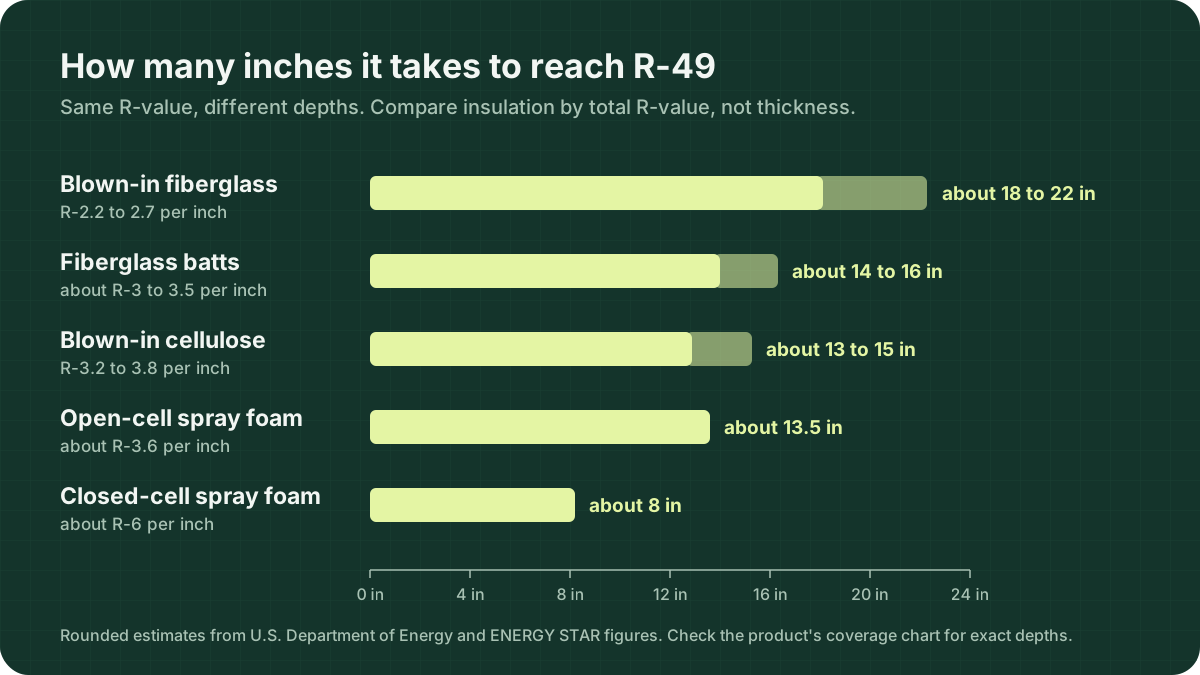
R-value per inch is useful for comparing materials, especially when space is tight. Here are typical figures from Department of Energy and ENERGY STAR sources:
| Material | Typical R-value per inch |
|---|---|
| Blown-in fiberglass (settled) | 2.2 to 2.7 |
| Blown-in cellulose (settled) | 3.2 to 3.8 |
| Fiberglass batts | About 3 to 3.5 |
| Open-cell spray foam | About 3.6 |
| Closed-cell spray foam | About 6 |
Two things to keep in mind:
- You usually won't find R-value per inch on a package. Federal rules don't allow it on labels or in ads unless tests show it doesn't drop as the product gets thicker. For some products, it does drop with thickness.
- Compare products at the same R-value, not the same thickness. Ten inches of one material and ten inches of another can give very different results. The DOE recommends basing any comparison on equal R-values.
Rated R-Value vs. Real-World Performance
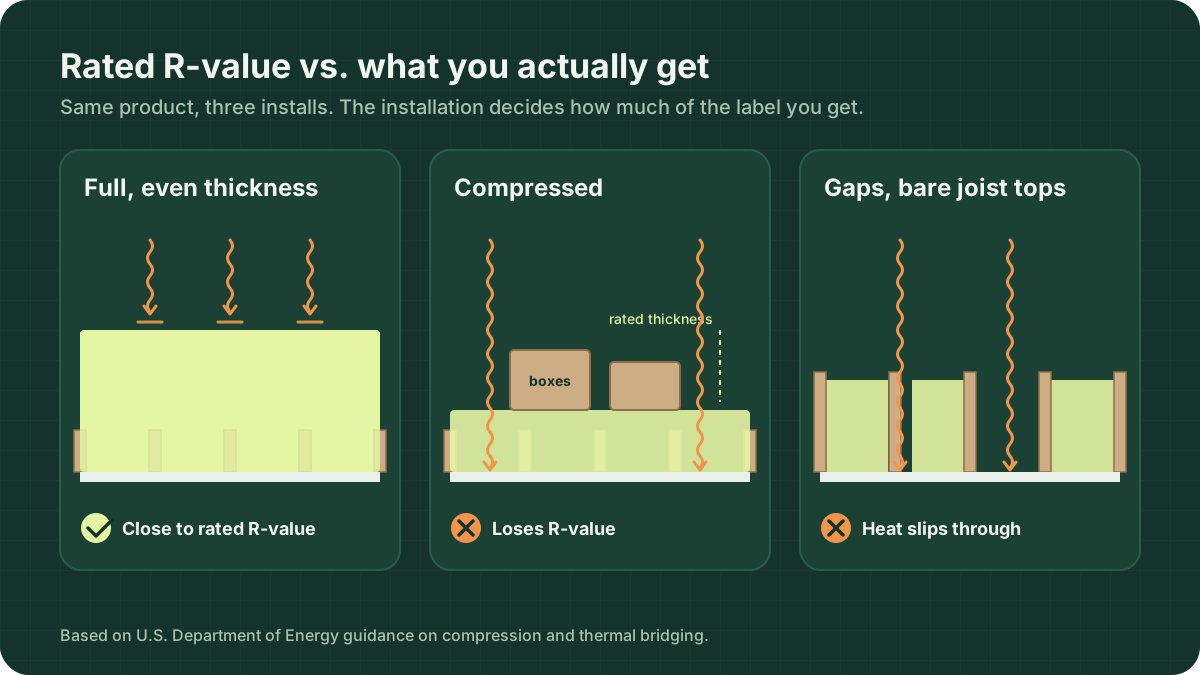
The R-value on the label is measured in a lab. In your house, the installation decides how much of it you actually get.
Compression
Squashed insulation loses R-value. The DOE gives a common example: an R-19 batt made for a 6¼-inch space, stuffed into a 5½-inch wall cavity, won't deliver its full R-19.
Framing (Thermal Bridging)
Wood studs and joists conduct more heat than the insulation between them. So the overall R-value of a wall or ceiling is somewhat different from the R-value of the insulation alone. That's one reason attic insulation should cover the tops of the ceiling joists, not just fill the spaces between them.
Settling
Loose-fill insulation settles over time. That's why its bags list both an initial installed thickness and a minimum settled thickness. The R-value is based on the settled thickness, so installers blow it in deeper at first.
Air Leaks
Insulation only slows air within the space it fills. It doesn't stop air leaking through gaps around wiring, plumbing, lights and the attic hatch. If those leaks aren't sealed first, you won't get the results the R-value suggests. This is why attic air sealing should happen before new insulation goes in.
Moisture
The DOE puts it simply: wet insulation doesn't work well. Roof leaks and damp areas need fixing before insulation can do its job.
How to Read an Insulation Label and Your Receipt
The Package Label
Under the Federal Trade Commission's R-value Rule, insulation packages must show the R-value and related details such as thickness and coverage area per package. The DOE notes that labels also carry health, safety and fire information.
If a contractor installs your insulation, the DOE suggests asking for the label from each package. That also tells you how many packages were used.
The Installer's Receipt
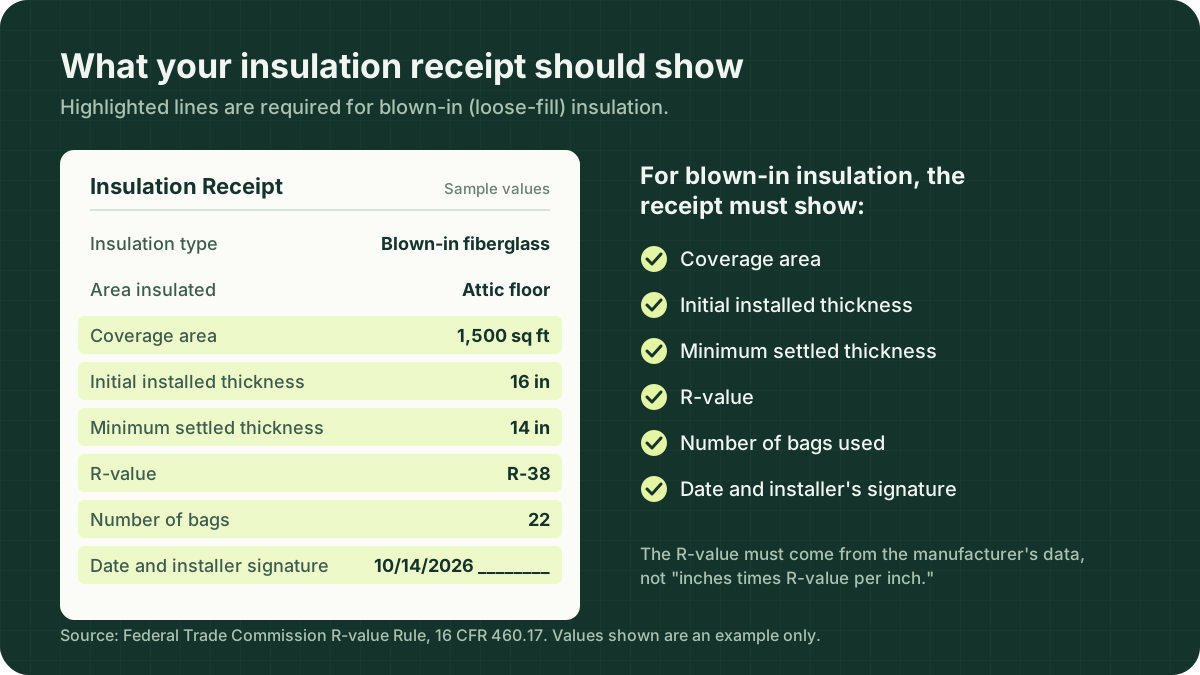
The same federal rule says professional installers must give you a dated, signed contract or receipt. What it has to show depends on the type of insulation:
| Insulation type | Receipt must show |
|---|---|
| Batts, rolls, spray foam and most other types | Coverage area, thickness and R-value |
| Loose-fill (blown-in) | Coverage area, initial installed thickness, minimum settled thickness, R-value and number of bags |
The rule also says installers can't add up R-values from different parts of the house, or multiply the R-value per inch by the number of inches installed. The R-value has to come from the manufacturer's data.
For San Antonio homeowners: CPS Energy's attic insulation rebate asks for an invoice showing the existing R-value, the final R-value and the total square footage installed. A proper receipt covers most of that.
U-Factor and SHGC: Ratings for Windows
Windows and doors use different ratings than insulation.
- U-factor measures how easily heat passes through. It works in the opposite direction from R-value: the lower the U-factor, the better the window insulates.
- Solar heat gain coefficient (SHGC) measures how much of the sun's heat a window lets in. A lower SHGC means less solar heat. ENERGY STAR sets lower SHGC limits for hotter climates, which matters in a city with long, sunny summers.
If you're comparing windows and insulation, don't compare U-factor and R-value directly. They are different scales for different products.
Perm Ratings and Vapor Retarders
A perm rating measures how easily water vapor moves through a material. Vapor retarders are grouped into classes:
| Class | Perm rating | Common examples |
|---|---|---|
| Class I | 0.1 perm or less | Polyethylene sheeting |
| Class II | More than 0.1, up to 1.0 perm | Kraft-faced fiberglass batts |
| Class III | More than 1.0, up to 10 perms | Latex paint |
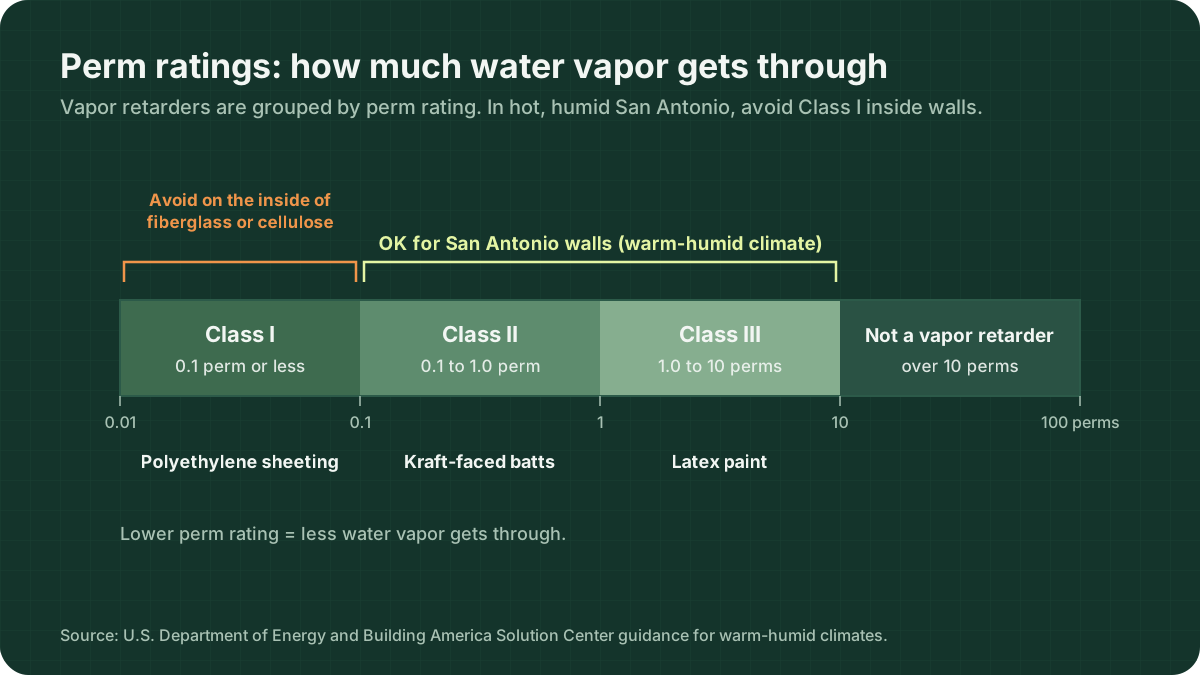
This matters in San Antonio's hot, humid climate. The DOE notes that no vapor barrier is required for mild or hot climates. DOE building guidance for warm-humid areas says any vapor retarder in a wall should be Class II or Class III. It also says not to install a Class I vapor retarder, like plastic sheeting, on the inside of air-permeable insulation such as fiberglass or cellulose.
If you're adding insulation over existing insulation, the DOE also advises against putting a vapor barrier between the two layers.
Fire Ratings and the ENERGY STAR Mark
Some ratings are about safety rather than energy:
- Facings: the DOE notes that kraft paper and standard foil facings on blanket insulation must be covered, for example with drywall, because of fire concerns. Facings made to be left exposed carry a flame-resistant rating, such as FS25 (flame spread index 25).
- Foam: fire safety codes generally require plastic foam insulation inside living spaces to be covered by drywall at least ½ inch thick.
- ENERGY STAR: insulation with the blue ENERGY STAR mark comes from manufacturers who agree to third-party testing, and it must meet flame resistance requirements.
How Radiant Barriers Are Rated
A radiant barrier works differently from insulation. Instead of slowing heat through the material, it reflects radiant heat from a hot roof. So it isn't judged mainly by R-value.
The DOE says radiant barriers need low emittance (0.1 or less) and high reflectance (0.9 or more). They tend to be more effective in hot climates, especially when ducts run through the attic. One installation tip: a radiant barrier laid on the attic floor soon gets covered with dust and stops working, so it belongs up near the roof.
What R-Values San Antonio Homes Need
San Antonio is in Climate Zone 2. These are the main targets:
| Part of the home | ENERGY STAR guidance for existing homes | 2021 IECC minimum for new homes |
|---|---|---|
| Attic | R-49 if uninsulated, R-38 if it already has 3 to 4 inches | R-49 |
| Wood-frame walls | Fill empty cavities when possible | R-13 |
| Floors over unconditioned space | R-13 | R-13 |
A quick check you can do yourself:
- Attic: ENERGY STAR suggests measuring the depth of your attic insulation and multiplying the inches by 3 for a rough R-value. If the insulation sits at or below the top of the floor joists, you likely need more.
- Floors over a crawl space or garage: the DOE suggests multiplying the thickness of a fiberglass batt by about 3.2. For foam board or spray foam, multiply by about 5.
If your attic falls short, our page on attic insulation in San Antonio explains how we bring attics up to the right level.
Common Mistakes When Comparing Insulation Ratings
- Judging by thickness alone. Two materials at the same depth can have very different R-values. Compare total R-value.
- Taking a blown-in depth at face value. For loose-fill, what counts is the minimum settled thickness on the bag, not how deep it looks on install day.
- Adding up R-values from different areas. An R-38 attic and R-13 walls don't make an "R-51 house." Each area is rated on its own.
- Skipping air sealing. A high R-value can't make up for air leaking through gaps around it.
- Using plastic sheeting in walls here. In a hot, humid climate, a Class I vapor retarder on the inside of fiberglass or cellulose can trap moisture.
- Laying a radiant barrier on the attic floor. Dust makes it stop working.
Frequently Asked Questions
Is a higher R-value always better?
A higher R-value always means more resistance to heat flow. But the right amount depends on your climate and where the insulation goes. The DOE's recommended levels are based on balancing energy savings against installation cost, which is why the targets differ for attics, walls and floors.
Can I add the R-values of two layers together?
Yes. The DOE says you add the R-values of the individual layers. One detail: new insulation stacked on top slightly compresses the old layer. The DOE suggests adding about one extra inch if the old insulation is fiberglass, or about half an inch if it's cellulose or rock wool, to reach the total you want.
Does spray foam's R-value include its air sealing?
No. R-value measures resistance to heat flow through the material, not air leakage. Spray foam also seals air where it's applied, which is a separate benefit. You can read more about where it fits on our spray foam insulation page.
Why do different sources list different R-values per inch for the same material?
Products vary in density and formula, and for some materials R-value per inch changes with thickness. Treat published ranges as a guide, and use the R-value on your specific product's label and coverage chart.
Conclusion
R-value is the number to focus on. Higher means more resistance to heat, and San Antonio attics should reach about R-38 to R-49. Just remember that the label only tells you what the product can do. Full thickness, no compression, sealed air leaks and a dry attic decide what you actually get.
When you hire an installer, ask for a dated receipt with the coverage area, thickness or settled thickness, and R-value, plus the package labels. That protects you, proves what was installed, and helps if you apply for a CPS Energy rebate.
If you'd like to know where your attic stands today, we can measure your current insulation and explain the ratings in plain terms before you decide on anything.
References
- Federal Trade Commission. Labeling and Advertising of Home Insulation (R-value Rule), 16 CFR Part 460 (opens in a new tab)
- U.S. Department of Energy and Oak Ridge National Laboratory. Insulation Fact Sheet (opens in a new tab)
- ENERGY STAR. Recommended Home Insulation R-Values (opens in a new tab)
- U.S. Department of Energy. Vapor Barriers or Vapor Retarders (opens in a new tab)
- U.S. Department of Energy. Radiant Barriers (opens in a new tab)
- CPS Energy. Ceiling-Attic Insulation Rebate (opens in a new tab)